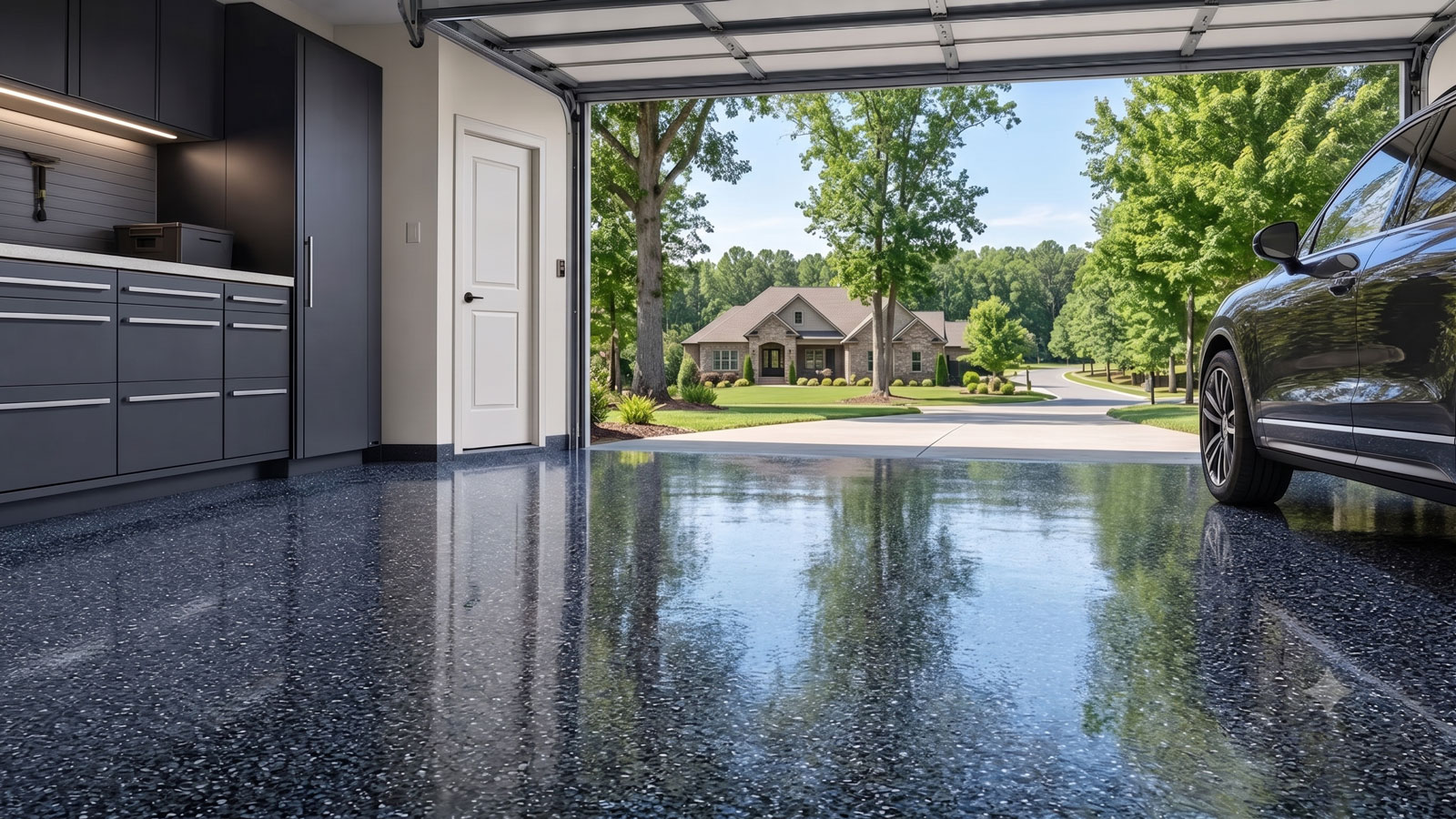
Garage Floor Coating in Kent, OH
Garage floor coating guidance for Kent's mixed residential, rental, workshop, basement, and small-commercial concrete needs.
Floor Coating Considerations in Kent, OH
Kent's floor-coating decisions should start with observed concrete condition and real garage use, not a generic regional description. Kent's Chapter 1193 requires comprehensive stormwater plans for commercial and industrial developments. A stormwater pollution prevention plan is part of the municipal requirement. Those are specific public infrastructure facts, not proof that a particular floor is damp. Check the real slab and past finishes before coating.
The city may require such a plan even for projects disturbing less than one acre. Northeast Ohio winters make tire-carried grit, slush and road-treatment residues practical cleaning issues. Akron's 1991–2020 annual snowfall average is about 47.2 inches, a regional measure rather than a precise total for every Kent property. Separate tire puddles, doorway runoff and persistent dampness.
Akron's 1991–2020 regional snowfall average is approximately 47.2 inches, not a measurement for individual Kent garages. For a Kent homeowner, the useful outcome is a written surface-preparation plan that identifies real cracks, patch repairs and any old finish. Epoxy and polyaspartic systems depend on grinding, suitable layers and proper curing. A decorative coat cannot correct ongoing concrete movement or an exterior drainage problem.
Local Project Context
Kent's Chapter 1193 requires comprehensive stormwater plans for commercial and industrial developments. The city may require such a plan even for projects disturbing less than one acre. Those documented local details offer more than a blanket claim about Northeast Ohio weather. They make public drainage, winter parking and existing concrete worth discussing, but the coating decision must be based on an individual home's slab.
What Affects the Cost of Garage Floor Coating in Kent?
The cost of coating a Kent garage depends on the concrete found during inspection. A stormwater pollution prevention plan is part of the municipal requirement. Public projects and municipal water controls do not establish a household's repair needs; only the condition of previous paint, contamination, joints and damaged patches can do that.
Door thresholds, wall edges, cabinets and stored equipment also affect labor. The quote should itemize preparation, repairs, full coating layers, decorative texture and product-specific curing, rather than treat all two-car garages as interchangeable.
- Concrete finish and history: Check for paint, sealer, earlier epoxy and replacement pours. Home age cannot establish slab age. A written estimate should specify grinding and old-finish removal according to what is observed.
- Local drainage setting: Kent's Chapter 1193 requires comprehensive stormwater plans for commercial and industrial developments. Public stormwater records make runoff worth discussing but cannot determine groundwater, dampness or doorway leaks within a private garage.
- Seasonal road residue: The city may require such a plan even for projects disturbing less than one acre. Vehicles may carry deicing grit indoors, but actual salt deposits need inspection and appropriate cleaning rather than an assumed universal repair.
- Cracks and joint treatment: Surface pitting, moving joints and repair patches may require different treatment. A decorative resin finish does not halt slab movement or strengthen unsound concrete.
- Physical access: Garage edges, steps, drains, workbenches and storage affect labor beyond square footage. Arrange clearance for mechanical preparation and protect finishes at adjoining thresholds.
- Texture and curing: Decorative flake, sheen, traction and the topcoat determine appearance and cleaning. Get the manufacturer's temperature limits and vehicle-return schedule before scheduling the work.
Call for a clear, project-specific estimate—or request one online.
Kent Stormwater Context and the Private Garage
Kent's Chapter 1193 requires comprehensive stormwater plans for commercial and industrial developments. A stormwater pollution prevention plan is part of the municipal requirement. These are meaningful local distinctions, but public works responsibilities must be kept separate from a residential slab. A city may inspect drains and detention facilities while an individual driveway still directs stormwater toward its garage. The homeowner should watch the door opening during rain and ask who is responsible for any observed exterior problem.
The city may require such a plan even for projects disturbing less than one acre. This additional documentary anchor concerns municipal management, not epoxy chemistry. If old paint blisters or damp spots persist when no vehicle has been parked, a contractor may recommend more investigation before coating. If puddles occur only after a snowy car returns, daily winter maintenance and finish texture may be more relevant than drainage reconstruction.
Akron-area climate records show about 47.2 inches of annual snowfall as the 1991–2020 average for the Akron station. Road grit and snowmelt can be carried into garages, but neighborhood traffic, plowing and actual parking use vary. An installer should assess contamination on the floor rather than equate climate statistics with damage.
Resin on sound, correctly profiled concrete can make sweeping and cleanup easier. It cannot stop rain passing a defective door seal or prevent continued settlement. Ask for a scope identifying grinding, preparation, cracks, moisture concerns and separate work outside the coating contract.
Planning Concrete Preparation in Kent
Kent's environmental setting includes the Cuyahoga River and northeast Ohio seasonal snow. That numerical or regulatory record adds local specificity, but a homeowner should not assume a municipal planning document tells them whether a garage floor can bond to epoxy or polyaspartic. A slab may have been repoured after construction of the home, and an apparently clean surface may retain curing compounds or invisible sealer. Direct inspection is necessary.
Akron's 1991–2020 regional snowfall average is approximately 47.2 inches, not a measurement for individual Kent garages. Translate that local context into practical questions about driveway runoff, residue entering with vehicles and how the household uses the garage. A car bay that also stores tools or outdoor equipment needs access around cabinets and steps during grinding. A contractor should explain repairs and the intended concrete surface profile rather than promising a one-day decorative transformation.
For a Kent garage, compare complete installed systems: old-finish removal, mechanical preparation, crack and joint treatments, coating layers, topcoat texture and realistic curing. Discuss traction with wet shoes, regular sweeping, and where cars can park until the specified return-to-service time. The best material choice depends on the actual concrete and user priorities.
- Identify previous paint, sealer and epoxy.
- Mark cracks and repaired joints.
- Observe driveway and garage-door runoff.
- Separate snowy tire puddles from sustained dampness.
- Clear belongings for edge preparation.
- Confirm texture and cure instructions.
Frequently Asked Questions
What is locally distinctive about Kent's drainage?
Kent's Chapter 1193 requires comprehensive stormwater plans for commercial and industrial developments. That public detail helps frame runoff questions, but it does not diagnose an individual slab. Observe the driveway, door seal and actual floor moisture before deciding on repairs.
Does winter climate guarantee salt damage in a Kent garage?
No. Akron's 1991–2020 snowfall normal is about 47.2 inches annually, but the residue inside any garage depends on actual driving and cleanup. Inspect contamination and old coatings before specifying preparation.
Can a coating fix water entering at the garage door?
No. Correct recurring exterior runoff and door-seal problems first. A resin coating may simplify cleaning on sound concrete but does not waterproof a failed driveway slope or prevent structural movement.
Should I choose epoxy or polyaspartic in Kent?
Compare the complete system, concrete profiling, repair needs, UV exposure, finish texture and curing schedule. Neither category guarantees performance over oil, old sealer or persistently wet concrete.
What belongs in a Kent coating quote?
Ask for surface grinding, any old-coating removal, repairs, joints, product layers, topcoat and when cars can return. Include storage clearance and maintenance instructions rather than rely on a generic square-foot price.
Kent Neighborhoods & Local Context
Phone Quote Line
Discuss your project, concrete condition, and coating options before requesting an estimate.
(234) 400-7740Typical Two-Car Garage
$3,000–$5,500
for a typical two-car garage. Final pricing depends on floor size, concrete condition, prep work, coating type, and finish options.
Helpful Guides
Other Service Areas